How to Start a Yoga Practice from Scratch

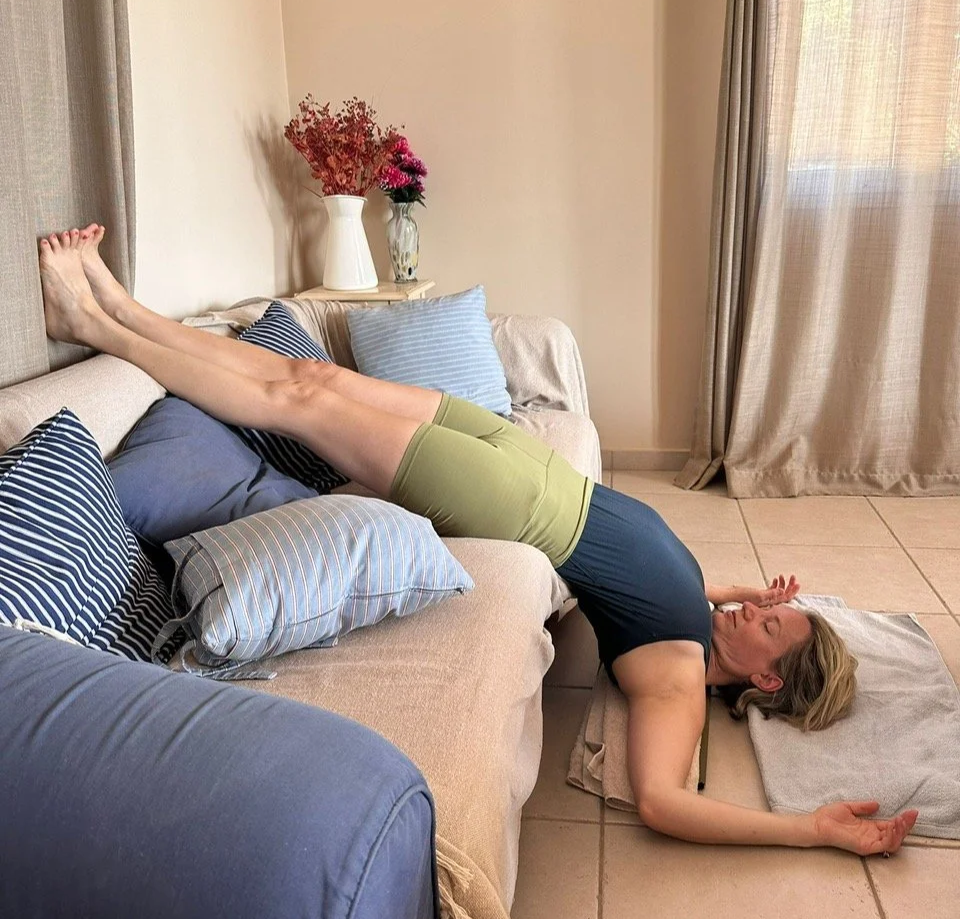
Adapted version of Shoulderstand with a selection of towels and blankets under my head and shoulders

I first started this blog over six years ago in order to encourage my students to start a home practice. I’m still just as passionate that my classes can be a springboard for students to practice yoga on their own.

Attending a regular yoga class with an experienced teacher is the foundation of your yoga practice, but a home practice is where you get to build a personal relationship with your practice.

However, I’m aware that there are so many things that get in the way of starting a home practice. Let’s run through a list of common obstacles and I’ll present some solutions:

  • “I’ve got no time”

    Depending on your stage of life, it can feel like there’s barely room to breathe, let alone fit in a yoga practice. But a practice can be 10 - 15 minutes. It’s the regularity that’s important. I find that putting a practice slot into my diary works as an encouragement, and as a commitment to myself. If it’s in the diary, I have to do it, right?

  • “I haven’t got all the right props”

    Iyengar yoga is a prop-based yoga method, and there is so much fun (and learning) you can have with them. But the beauty of this method is that it is inventive. As long as you have floor and a wall (or the back of a door) you have props. A dressing-gown cord can be a belt, a large book can be a brick. I find that the banisters on my landing are great for impromptu yoga poses.

    The other excuse is that ‘I do have the props, but I store them away’. I suggest keeping your mat and a belt in your bedroom. My mat is often just left out almost like a bedside rug. Then first thing in the morning and last thing at night I am reminded to do a few poses.

  • “I don’t know what I’m doing”

    There is an art to building a yoga sequence, but there is also nothing wrong with picking three or four poses that you enjoy in your weekly class and practicing them at home. If you enjoyed Trikonasana (Triangle pose) then try doing it against the wall, try it with your back foot to the wall, try it taking your hand to the floor and so on. Inversions are a great way to boost your mood and energy levels, and this can be as simple as ‘Legs up the wall’, or even just elevating your legs on a chair or the sofa.

    There are also some key books that will help you with the poses. The core book of all Iyengar yoga practitioners is Light on Yoga. It’s worth getting a second hand copy and having it lying around. Remember to practice to your limits though.

    There are also lots of online resources. I have a (very simple) YouTube channel with some home practice videos which can give you some ideas.

  • “What if I hurt myself”

    Leading on from the last point, if you’ve had an injury it can feel scary doing a yoga practice at home on your own. The first thing would be to get the all-clear to exercise from a medical professional. Then, starting with the standing poses is a good way to gain strength, and there are so many ways to adapt the poses to suit any ability. You can work with the wall, taking your back to the wall to help open up the front body. You can take your hands to a chair if the hamstrings are tight. Shoulder injuries need patience and you can use a belt to access poses such as Gomukhasana. Starting gently and working with the breath you will start to gain confidence with knowing your own body’s limits.

  • “There’s so many poses I can’t do”

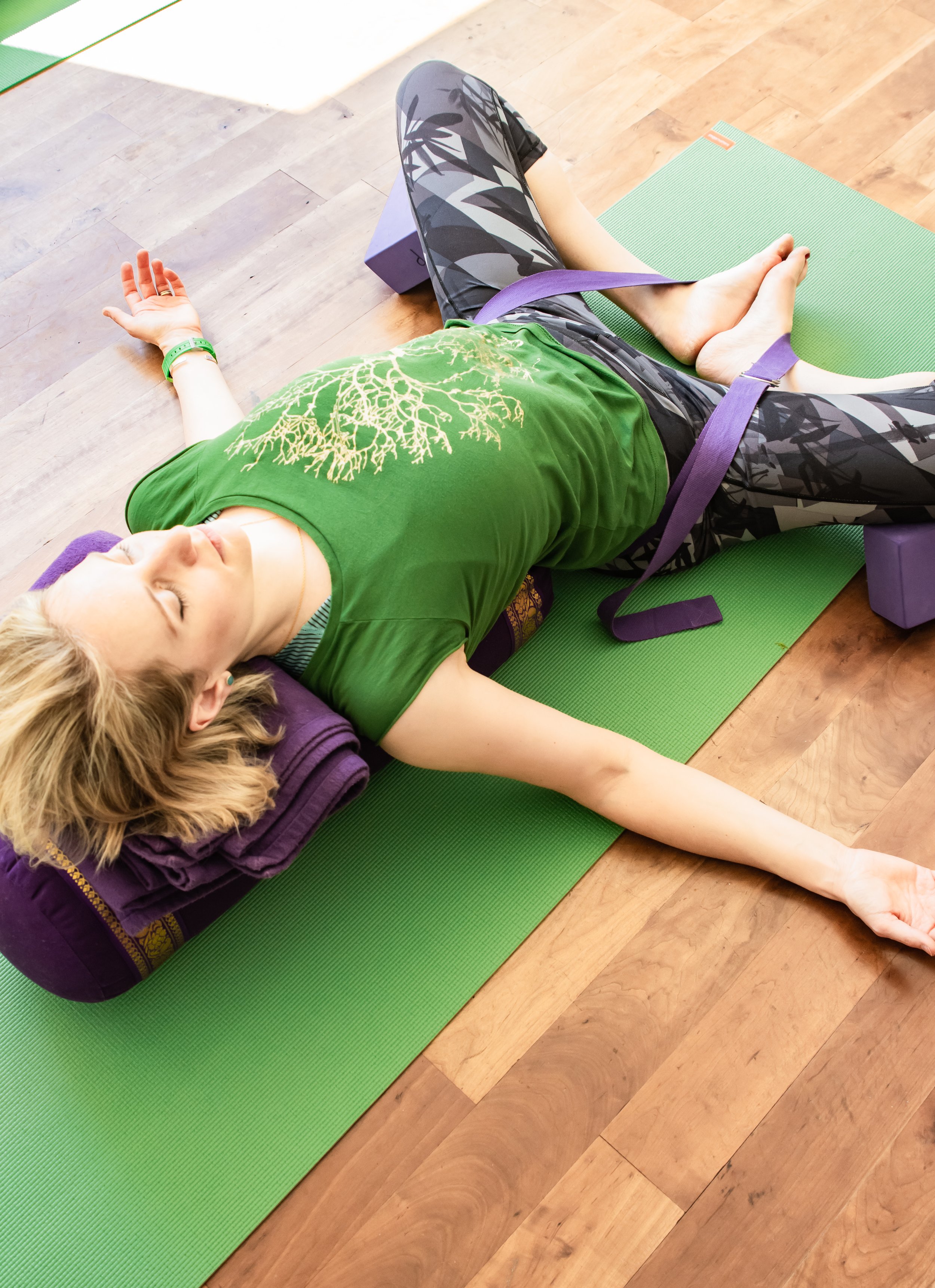
    But there are so many poses you CAN do! Don’t forget that your yoga practice can be a restorative practice. Lying in Supta Baddha Konasana (Supine Bound Angle pose) for 15 minutes over support, and focusing on the breath is a great way to calm the nervous system.

I hope this blog has inspired you, even if it’s just to do one pose a day! Another thing I like to say to students is that you can do ‘yoga snacks’. While waiting for the kettle to boil, stretch out into half Uttanasana with your hands on the worksurface and your legs vertical. While brushing your teeth practice standing on one leg.

Have you found ways to incorporate yoga into your daily life? I’d love to hear your ideas.
Subscribe

Sign up below to receive a monthly newsletter including top tips and ideas for your yoga practice

Why a Restorative Yoga Practice is ALWAYS a Good Choice

I’ve written before about the importance of rest, but as we head into the winter months after a long period of uncertainty, this has never been more important.

Speaking to several students over the past few months, it feels as if things are very busy for many of us.

This isn’t surprising, as this is the first time in a while that we have been ‘back to normal’, while at the same time, living in a country that currently has the highest rates of Covid in Europe. This is on top of the usual coughs, colds and seasonal bugs that are starting to do the rounds.

The beauty of Iyengar yoga, and having a yoga practice, is that our practice can be a perfect fit. It can change according to your mood, the season, the time of day, your energy levels and so on.

And interestingly I have been choosing a predominantly restorative practice for the last few weeks.

A Bit More about Restorative Yoga

BKS Iyengar is credited with having ‘invented’ restorative yoga as a concept. Due to the ill-health he suffered in his formative years, Iyengar had to fashion props from bits of wood or everyday objects in order to get into yoga poses. His inventive use of props meant that the benefits of poses could be felt without over-straining the body.

Restorative yoga is about allowing the pose to do you, rather than you doing the pose. You have to allow the body to inhabit the pose, and then let the breath inhabit the body, and the mind inhabits the breath. When you become fully passive in the pose there is a sense of weightlessness and submersion in the pose.

 Why Restorative Yoga isn’t Resting Yoga (necessarily)

The name restorative can be misleading however. Some students get overexcited when the bolsters come out, but restorative yoga doesn’t necessarily mean it’s going to be resting.

Restorative yoga is about restoring the natural balance of the body, physically, emotionally, and hormonally. Sometimes this is done through supported backbends, long holds of inverted poses and other things that can feel distinctly UNRESTFUL while you’re doing them.

This is because yoga emphasises the need for relaxation, but it goes further and advocates rejuvenation. Relaxation is going from a negative to a neutral state, while rejuvenation is going from a neutral to a positive state.

Why Inverted Asanas are Especially Important

All restorative yoga poses have their benefits, but inverted restorative poses are particularly important for a stressed-out nervous system and for mental and emotional health.

Any pose where the head is positioned below the heart counts as an inverted pose, so you don’t have to be up in full headstand or shoulderstand. Also standing inversions, such as Uttanasana and Adho mukha svanasana with the head supported (preferably on something soft) give the same benefits.

Focusing on Relaxing the Eyes

We can feel tired after a whole day spent working on the computer, but it’s brain-tired. Our eyes are pushed forwards from looking at the screen, and we haven’t been breathing properly so the body is not fully oxygenated.

With so much of our lives now conducted on screens – Zoom meetings, online yoga, WhatsApp chats, and so on, we need to find a way to take a break from all the screen-related activities.

Yoga gives us this time to rest our eyes. Here’s a simple exercise you can try: take a bandage and softly cover the eyes. Lie in supported savasana and allow the eyes to completely soften. Focus on the breath.

In any yoga pose, it’s important to check on what’s happening with the eyes, especially strenuous poses such as backbends. We need to learn to soften the face, even while working the rest of the body – this eventually leads to the ‘effortless effort’ of Patanjali’s sutras.

Practical Help

If you’ve felt inspired to start a restorative yoga practice, then why not check out my YouTube video on the Five Basic Restorative Poses for some practical help.

Subscribe

Sign up below to receive a monthly newsletter including top tips and ideas for your yoga practice