How to Start a Yoga Practice from Scratch

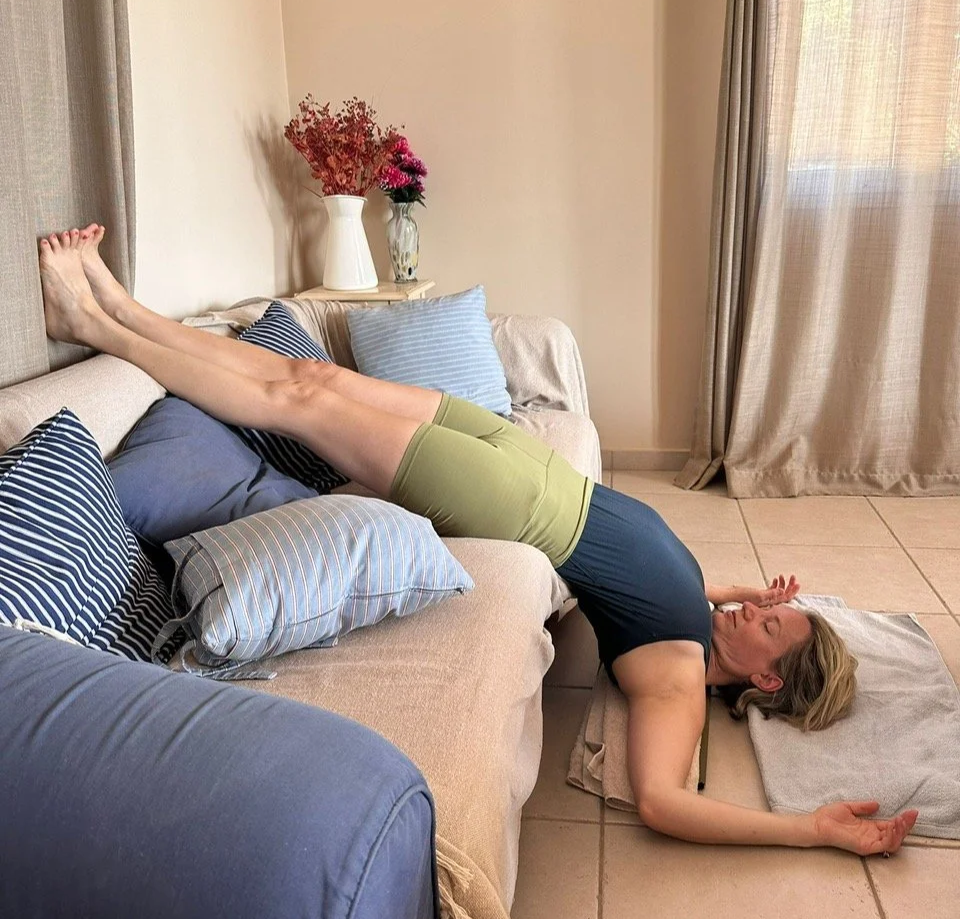
Adapted version of Shoulderstand with a selection of towels and blankets under my head and shoulders

I first started this blog over six years ago in order to encourage my students to start a home practice. I’m still just as passionate that my classes can be a springboard for students to practice yoga on their own.

Attending a regular yoga class with an experienced teacher is the foundation of your yoga practice, but a home practice is where you get to build a personal relationship with your practice.

However, I’m aware that there are so many things that get in the way of starting a home practice. Let’s run through a list of common obstacles and I’ll present some solutions:

  • “I’ve got no time”

    Depending on your stage of life, it can feel like there’s barely room to breathe, let alone fit in a yoga practice. But a practice can be 10 - 15 minutes. It’s the regularity that’s important. I find that putting a practice slot into my diary works as an encouragement, and as a commitment to myself. If it’s in the diary, I have to do it, right?

  • “I haven’t got all the right props”

    Iyengar yoga is a prop-based yoga method, and there is so much fun (and learning) you can have with them. But the beauty of this method is that it is inventive. As long as you have floor and a wall (or the back of a door) you have props. A dressing-gown cord can be a belt, a large book can be a brick. I find that the banisters on my landing are great for impromptu yoga poses.

    The other excuse is that ‘I do have the props, but I store them away’. I suggest keeping your mat and a belt in your bedroom. My mat is often just left out almost like a bedside rug. Then first thing in the morning and last thing at night I am reminded to do a few poses.

  • “I don’t know what I’m doing”

    There is an art to building a yoga sequence, but there is also nothing wrong with picking three or four poses that you enjoy in your weekly class and practicing them at home. If you enjoyed Trikonasana (Triangle pose) then try doing it against the wall, try it with your back foot to the wall, try it taking your hand to the floor and so on. Inversions are a great way to boost your mood and energy levels, and this can be as simple as ‘Legs up the wall’, or even just elevating your legs on a chair or the sofa.

    There are also some key books that will help you with the poses. The core book of all Iyengar yoga practitioners is Light on Yoga. It’s worth getting a second hand copy and having it lying around. Remember to practice to your limits though.

    There are also lots of online resources. I have a (very simple) YouTube channel with some home practice videos which can give you some ideas.

  • “What if I hurt myself”

    Leading on from the last point, if you’ve had an injury it can feel scary doing a yoga practice at home on your own. The first thing would be to get the all-clear to exercise from a medical professional. Then, starting with the standing poses is a good way to gain strength, and there are so many ways to adapt the poses to suit any ability. You can work with the wall, taking your back to the wall to help open up the front body. You can take your hands to a chair if the hamstrings are tight. Shoulder injuries need patience and you can use a belt to access poses such as Gomukhasana. Starting gently and working with the breath you will start to gain confidence with knowing your own body’s limits.

  • “There’s so many poses I can’t do”

    But there are so many poses you CAN do! Don’t forget that your yoga practice can be a restorative practice. Lying in Supta Baddha Konasana (Supine Bound Angle pose) for 15 minutes over support, and focusing on the breath is a great way to calm the nervous system.

I hope this blog has inspired you, even if it’s just to do one pose a day! Another thing I like to say to students is that you can do ‘yoga snacks’. While waiting for the kettle to boil, stretch out into half Uttanasana with your hands on the worksurface and your legs vertical. While brushing your teeth practice standing on one leg.

Have you found ways to incorporate yoga into your daily life? I’d love to hear your ideas.
Subscribe

Sign up below to receive a monthly newsletter including top tips and ideas for your yoga practice

How Yoga Helps you be Open to Change

It’s almost the end of March and spring is in the air. However, this year there is a poignancy to spring and its promise of new beginnings - my mum died last year in the very darkest part of the winter, and as beautiful as spring feels, it’s also the first spring without her.

It feels like a lot is changing; another example being that in just a couple of months my daugher will have finished her exams – and finished school. How have I got to the point that I will have no school-age children? It’s the end of an era for me.

Endings are difficult, but with each ending comes a fresh start.

Change is the only Constant

This truism was assigned to the Ancient Greek philosopher Heraclitus of Ephesus. But like all good truisms, there’s more to it than meets the eye. When we’re young, the routines and rules of childhood are a way of making us feel that the world is a regular, non-chaotic place, where life is predictable.

As we grow up we realise (hopefully gradually) that this is not the case. Life is not regular, predictable or safe. Change can happen suddenly, or gradually. But the only thing we can be certain of is that, eventually, everything changes.

It’s how we deal with this inevitable change that determines our resilience and happiness.

Why do we resist Change?

There’s a reason why we have comfort food and comfort zones -they’re ‘comfortably’ familiar. And it's also because our brains are hard-wired to find comfort in habits.

Our basal ganglia in the ancestral or primitive brain are responsible for “wiring” habits. This cluster of nerve cell bodies is involved in functions such as automatic or routine behaviors that we are familiar with or that make us feel good.

But sometimes these habits aren’t helpful to our long-term health or ability to deal with change.

Which is where Yoga comes in…

‘The practice of yoga teaches us to deal with each task in the day as it arises, and then to put it down.’

So says B K S Iyengar in his book Light on Life.

Unlike other unhelpful habits, a yoga practice is a commitment that we make to ourselves, to observe the change in our brains and bodies and adapt to them.

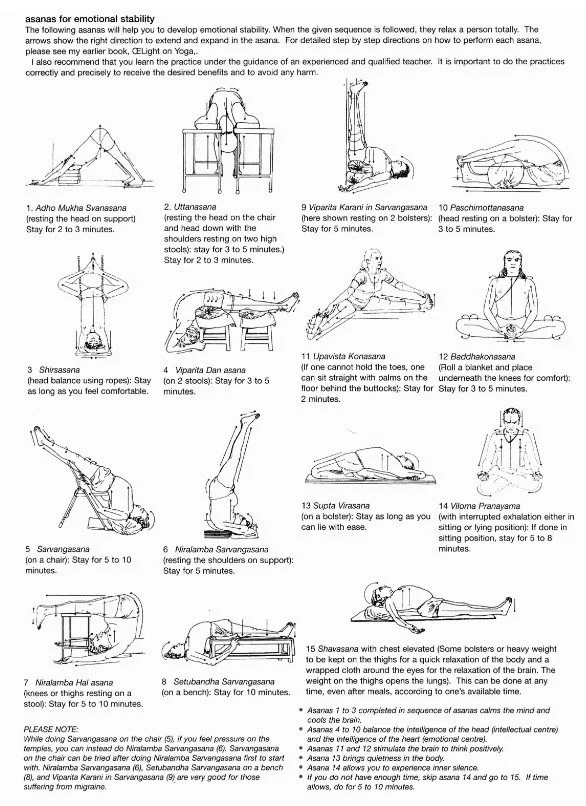
Yoga is a great way to balance out our feelings about life and all it throws at us. For example, Setu Bandha in all its variations enhances emotional stability.

Your yoga practice changes with YOU

If you scroll through Instagram you’d be forgiven for thinking that progress in yoga is a clear graph, with the hours of practice on the bottom, the effort involved on the other side, and then an upward trajectory of yoga practice. This isn’t helped by the ‘before’ and ‘after’ pictures often posted.

Which is not to say you won’t get more flexible over time, but it’s not a straight upward line. There will be setbacks. The body changes. You go through illness, or grief, or hormones shift. Some days your poses will feel like they did when you first started – even if to outside eyes they don’t look like it.

This is because the yoga that happens IS NOT ALL ABOUT WHAT THE POSES LOOK LIKE. Yoga is about our understanding, intelligence and sensitivity to the body increasing over time, and instead of forcing the body into the shape of the pose, we might just go to the point where we feel a gentle stretch.

What are the best poses to practice to adapt to change?

If you have a difficult transition coming up, then there is a sequence for emotional stability that can be extremely helpful. Composed by BKS Iyengar and found at the back of his book Light on Life, it can be adapted or shortened, but here it is in full:


Subscribe

Sign up below to receive a monthly newsletter including top tips and ideas for your yoga practice

Your Handy Festive Yoga Sequence

It’s hard to keep a yoga practice going at this time of year.

We’re tired, there’s a lot going on, and it’s easy to skip it.

But if you can take 15 - 20 minutes to fit in a yoga practice, you will:

  • alleviate seasonal aches and pains

  • stretch out stiff muscles from lots of sitting

  • increase the efficiency of your digestion - much needed at this time of year

  • reduce stress and improve sleep

  • give yourself a much-needed bit of space

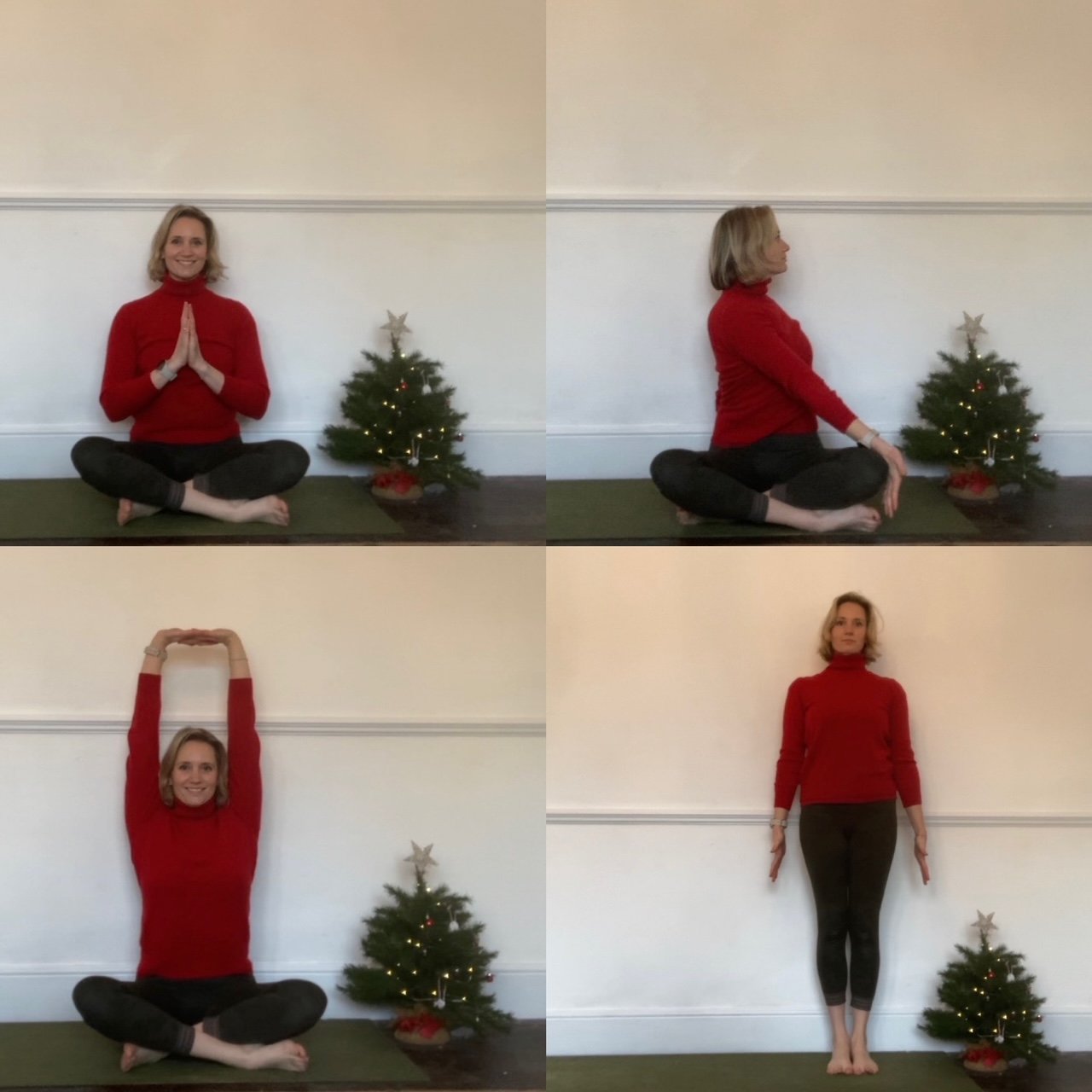
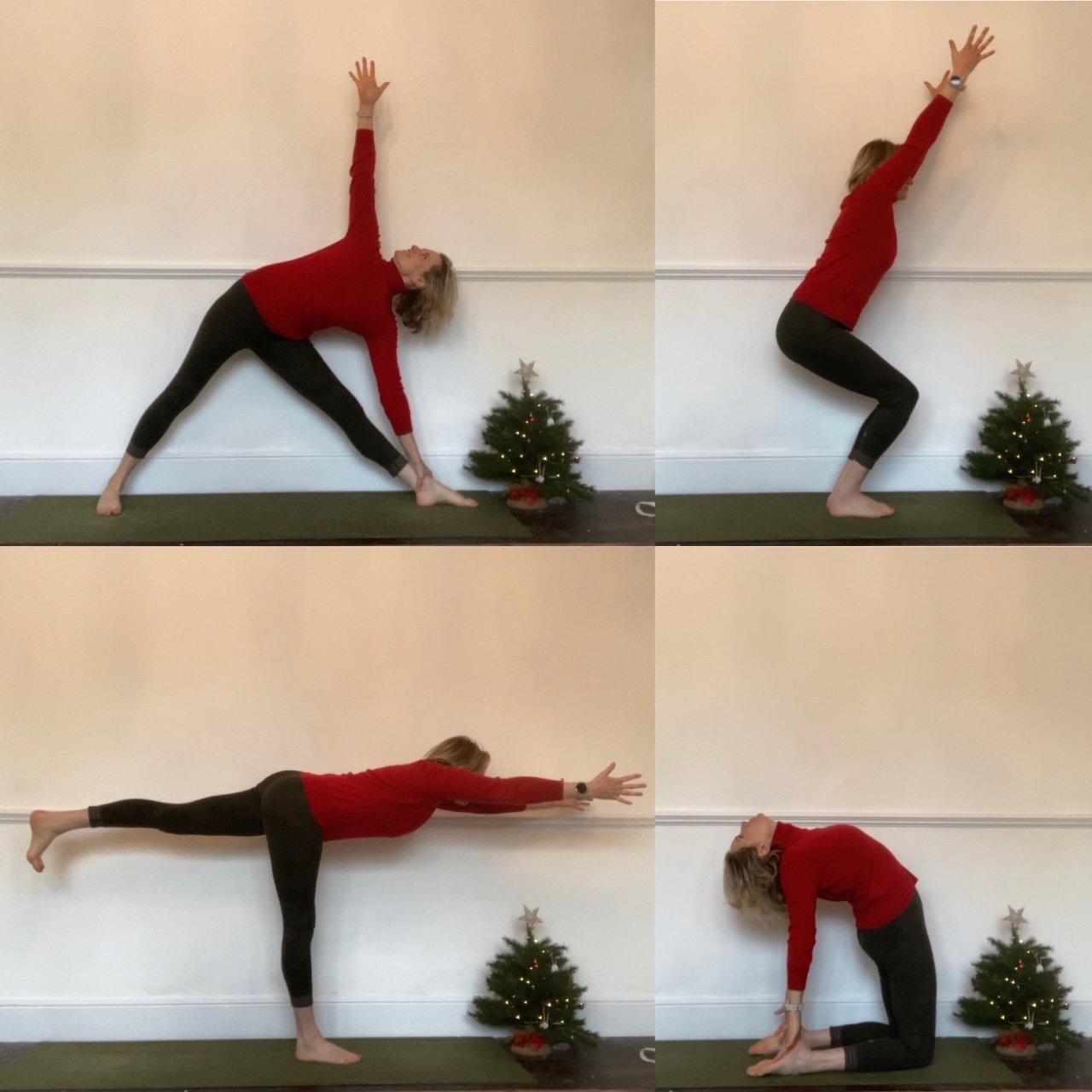
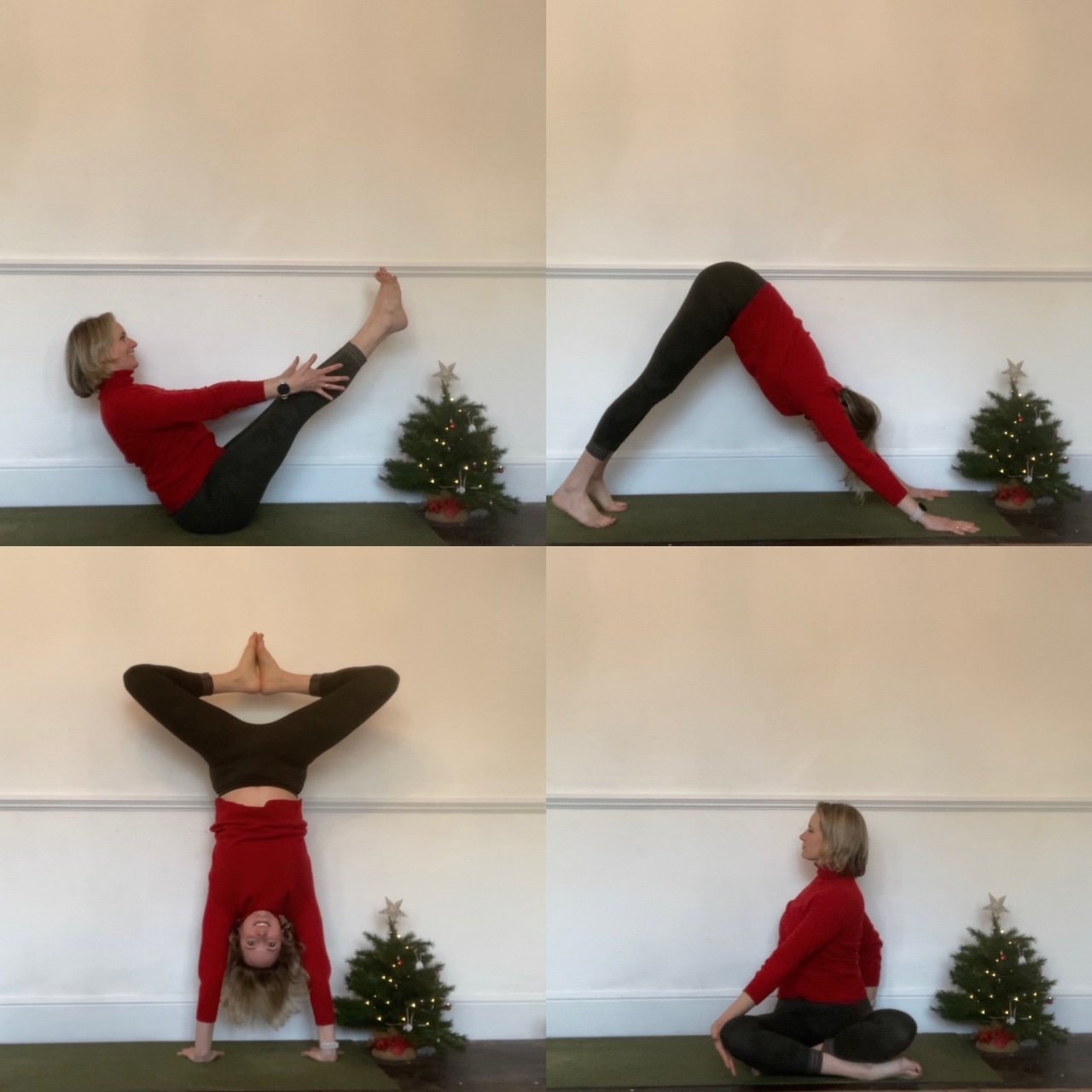
See below for an example of a quick practice to get everything moving.

Please take your own conditions into consideration. If you usually practice inversions, then add them in after the handstand - headstand, followed by shoulderstand.

And finally a 5-minute savasana (not pictured).

And a Merry Christmas to you all, and a happy New Year.

Subscribe

Sign up below to receive a monthly newsletter including top tips and ideas for your yoga practice