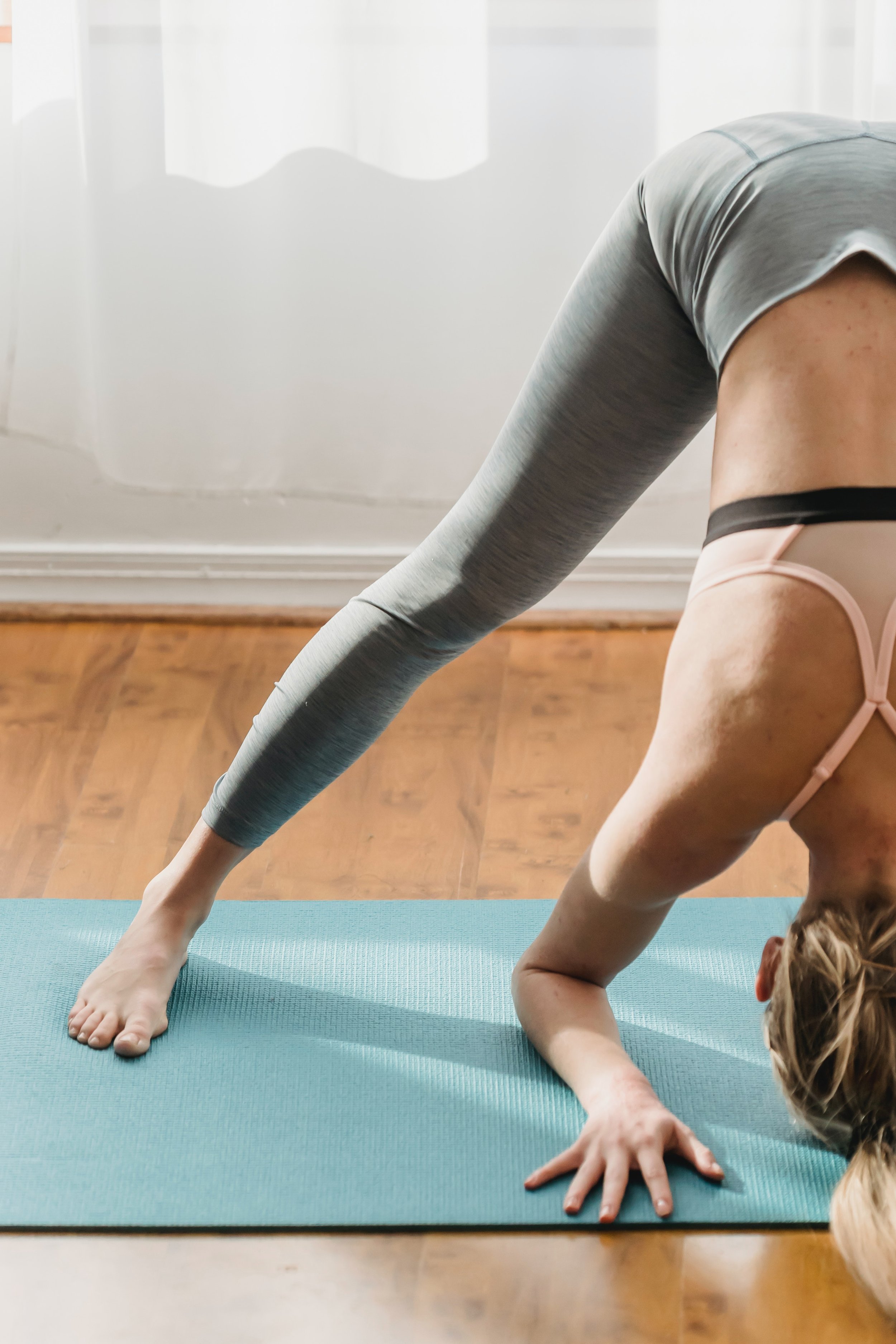
Why Do Iyengar Yoga? (as opposed to other forms of yoga)

Why do I feel compelled to write this blog? Surely most of my students already know the benefits of Iyengar yoga? Well, yes, hopefully!

But I feel that it’s time to share the message, and to spell out why I believe that this yoga method is truly the best way to experience the fullness of yoga – for everybody.

The Use of Props  

The most obvious difference between Iyengar yoga and other forms of yoga is the creative use of props. BKS Iyengar pioneered their use as a sickly child who was introduced to yoga by his less-than-accommodating uncle, Tirumalai Krishnamacharya. Starting at first with adapting what he could find around the house, he used sawn-off bits of wood as bricks and so on.

The use of props isn’t to make yoga ‘easier’. In fact, it can often make it harder! Props are there to act as limb extensions in order to touch the floor in Uttanasana (Standing forward fold), or to bring awareness to certain parts of the body in a pose, such as this week when we were holding a brick to the breastbone to bring awareness and openness there. Props can make parts of the body work harder, such as using a belt on the thighs to turn them in standing poses. The wall and the floor both count as props in Iyengar yoga and can help to understand balancing poses with support.
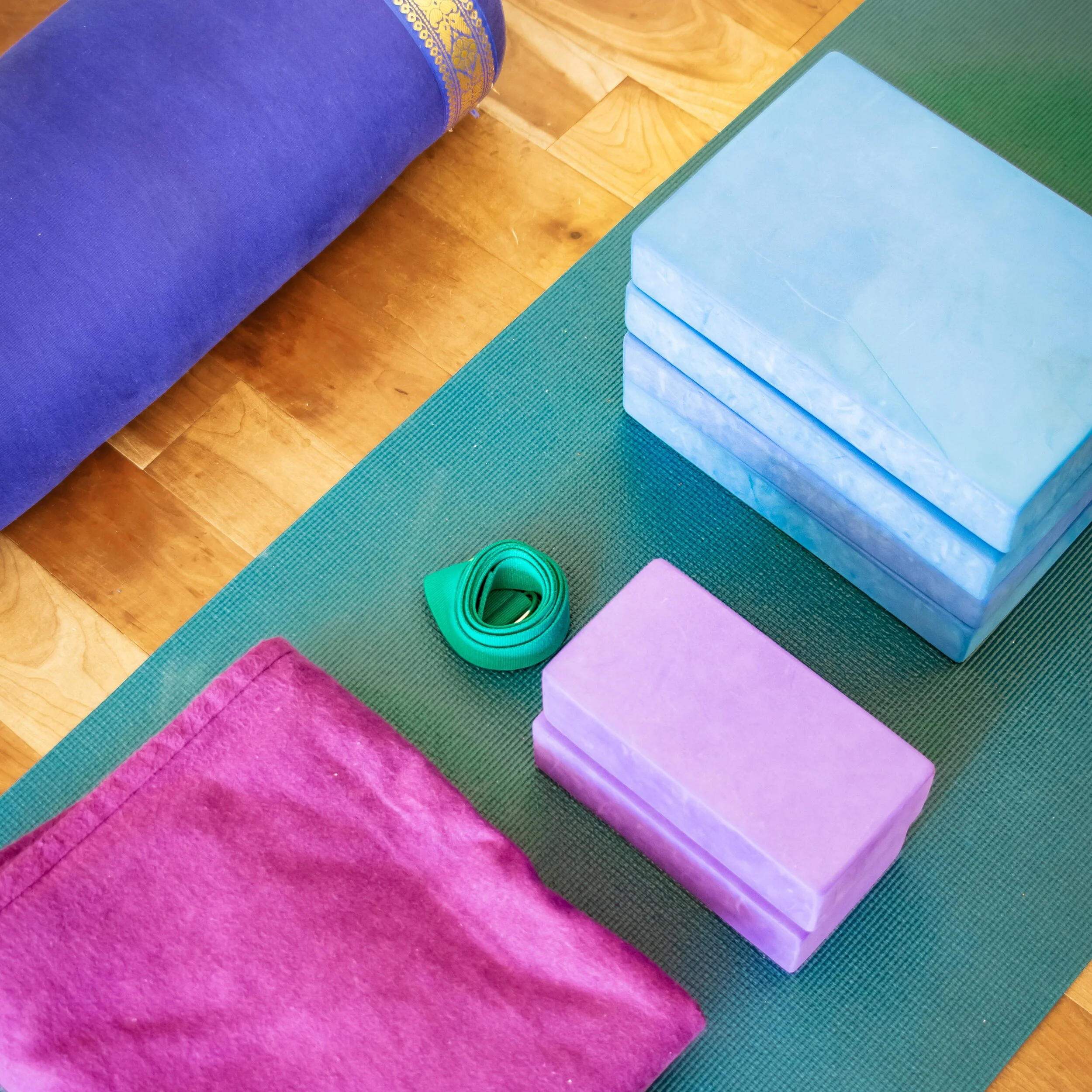
Props are also essential for restorative yoga, which I teach regularly. The use of bolsters and blankets allows the body to find rest in a world that is constantly stretching our nervous systems to the max.

The Use of Demonstration and Correction

In an Iyengar yoga class, you will have plenty of opportunities to fully understand the pose you’re being asked to do. Firstly, the teacher will demonstrate the full pose, showing what props will be used. Then the teacher will often do the first side of the pose with the class, as a reminder, giving detailed verbal instructions at the same time.

Then the teachers will leave their mats and OBSERVE the students, to give detailed corrections and occasionally physical corrections. No student is left to flounder at the back on their own.

The Training

Iyengar yoga teachers are extremely well-trained. The training is mentor-led, with students needing to attend regular classes for a minimum of three years before a three-year training period. At the moment I’m studying for the next Level of teaching and have been for the last five years. There is no time limit on the training time, and my mentor and ‘mentee’ decide together when they are ready for assessment.

This means that learning is done in an organic way. The necessary skills are not just rote-learned but acquired through years of observation and practice.

The Lineage

Most Iyengar yoga teachers start their classes with the invocation to Patanjali. This isn’t just to challenge their students with chanting another language (Sanskrit, the basis of all Indo-European languages), but because Iyengar yoga is based on the yoga sutras of Patanjali, a sage, the likes of Leonardo da Vinci, who lived about 1700 years ago.

Patanjali’s sutras were interpreted and studied by BKS Iyengar, who used them as the philosophical basis of this methodology. The Iyengar family are still the head and heart of the global Iyengar yoga community. BKS Iyengar’s granddaughter Abhijata took over when her grandfather and aunt, Geeta, died within a few years of each other. She has led the yoga community through the Covid pandemic and has also implemented seismic changes to the training systems to be more compassionate to trainee teachers. Her teaching style is clear, challenging, but also puts emphasis on the intelligence of the practitioner. Teachers are encouraged to apply to study for month-long blocks at the Institute of Iyengar yoga in Pune in India, giving teachers an authentic grounding.

The IY(UK) is the UK’s national association and formal link to Pune. They organise national conventions with visiting teachers from India, have a database of all Iyengar yoga teachers in the UK and Northern Ireland, and regulate and assess all teachers. But you don’t have to be a teacher to be a member. As a member of IY(UK) you receive a high-quality, packed biannual magazine, as well as lots of extra benefits.

The Sequencing

Iyengar yoga is a progressive system. Students will be guided from the basic poses (which are never really ‘basic’) to more advanced poses as and when they are ready. There are always options offered for trickier poses, so students aren’t just left twiddling their thumbs.

Many Iyengar yoga teachers use what’s known as ‘the Pune cycle’ which is a four-weekly rotation of standing poses, forward bends, backbends and pranayama (and restorative yoga). This isn’t a set system but is a useful framework to make sure students cover all the different types of poses on a regular basis. I have adapted this to a five-week cycle to include twists and miscellaneous (such as abdominal poses).  

There are no set sequences in Iyengar yoga, and you will never attend the same class twice. The most experienced teachers can craft sequences which guide students to poses you didn’t think you were capable of or can use one pose to highlight a certain aspect of another pose. Everything is taken into account – the level of students, the location, the props available, the time of year, the time of day. When you attend an Iyengar yoga class, it’s finely tuned. An Iyengar yoga teacher can also be adaptable and change their lesson plan if needed.

This sequencing includes pranayama, the third limb of yoga, a powerful practice which increases the capacity of the breath and soothes and restores the nervous system.

The Suitability for those with Injuries and Issues

All Iyengar yoga teachers are trained to deal with common injuries and issues, such as pulled muscles, stiff lower back, tight hips and so on. We are NOT doctors and will always defer to medical experts, but once a student is considered fit to return to exercise, Iyengar yoga has the tools to rehabilitate and strengthen the body. Restorative yoga is also an incredible resource for all of us, but especially for those who face physical or mental challenges in their day to day lives.

For more complex injuries and illnesses there are qualified therapy teachers who study for years and can work one to one with students.  

The Support

I found Iyengar yoga 15 years ago, happening by chance across it once my youngest started nursery. From my first class on the sticky floor of a local pub I was hooked. Not only was my body stretched in new and intriguing ways, but my mind was stretched too.
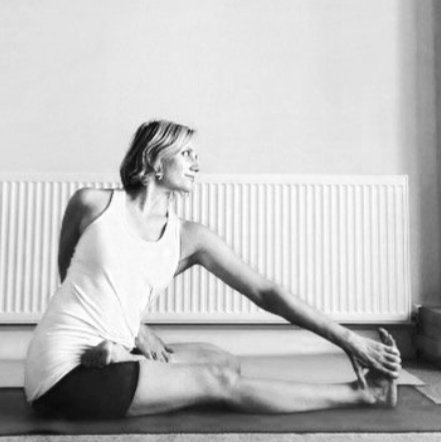
I’ve now been a teacher for eight years, and some of those years have been the hardest of my life so far, coping with family illness and bereavement. The combination of my practice, my teaching and the support of my Iyengar yoga teaching community has got me through those years.

As BKS Iyengar writes in his illuminating book Light on Life,

“Asana practice is an opportunity to look at obstacles in practice and life and discover how we can cope with them.”

Attending a weekly yoga class might not seem like much, but that commitment, to yourself, to your teacher and to your fellow students creates a community that has the power to lift and support you.

Subscribe

Sign up below to receive a monthly newsletter including top tips and ideas for your yoga practice

How Yoga can Lead to Contentment

It’s not easy to be content these days. FOMO is all around us and it’s catching. We get into the habit of upgrading and not just staying with what we have.

This attitude can affect how we feel about our yoga practice as well. Scrolling through Instagram it’s easy to feel that everyone’s practice is better than ours.

But it’s not about how yoga looks on the outside that’s important. Yes, we’re aiming to make the right shapes, but it’s what it’s doing on the inside and how we’re connecting our bodies that the real work happens.

What is contentment?

Contentment, or Santosha in Sanskrit, is one of the five niyamas, a personal ethical code which is one of the eight limbs of yoga. In yoga we need to cultivate contentment to make the mind a fit instrument for meditation, which is the ultimate purpose of the yoga poses we practice.

Originating from Latin and French, the middle English word ‘contentment’ has the literal meaning of ‘satisfaction from a claim or debt’. This puts a different spin on what we think of being content. It’s not a passive feeling, but an active reclaiming of something lost or wasted. We feel whole and that nothing is missing.

Action: Our posture can really impact mood and self-awareness. Try sitting up straight in your chair. Plant your feet on the floor and check that your spine is as tall as you can make it. Join your palms together in prayer pose or Namaskarasana and close your eyes. Connecting the palms brings us back to ourselves and pressing the base of the thumbs to the solar plexus centres us.

Namaskarasana or Prayer pose

But does being content mean that we’re passive?

There’s a misconception that being content means being without ambition or goals.

Contentment is about finding peace in every stage of life, but it doesn’t mean to never challenge yourself.

In the same vein, we can also apply contentment to an acceptance of our mixed successes in our yoga practice. Perhaps we can touch our toes after a long time of working at stretching the hamstrings. A student today touched her fingertips to her brick in Trikonasana, which for her was a great achievement. But for another student it might be kicking up in handstand for the first time.

Just because we can’t do something today, doesn’t mean we shouldn’t be content. We’re right where we’re meant to be.

Action: Make a list of the poses you’d like to get better at. This isn’t to make you feel bad about where you are today, but to give yourself a focus for the future.

How can we cultivate it?

This week I’ve been teaching restorative classes. Just because these are less active classes doesn’t mean they’re easier. In fact, for some students these classes pose a greater challenge as they require mental tenacity.

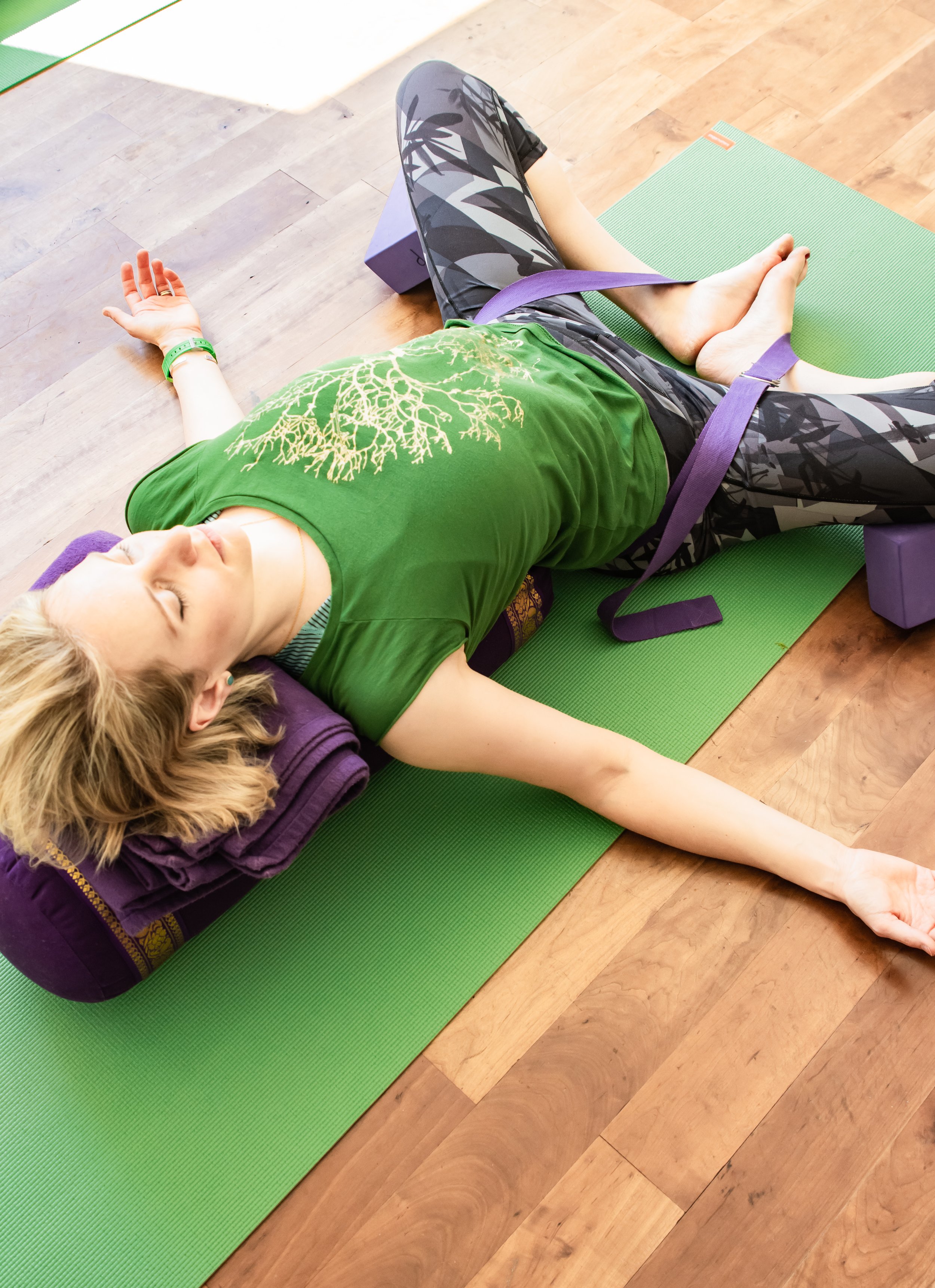
Supta Baddha Konasana

According to BKS Iyengar in Light on Life contentment ‘is an acceptance of one’s mixed lot as a human being.’ Restorative yoga is a great place to start when practising acceptance. We learn to accept the discomfort of the pose because a) we know there will be benefits in the long run and b) that the pose will end at some point! Which reminds me of that saying that gets trotted out in the face of adversity, which is that ‘Things will be alright in the end, and if they’re not alright, it’s not the end.’

 Action: Give yourself ten minutes to practice one or two restorative poses. Suppta Baddha Konasana is the one that most of us remember (Reclining Bound angle pose).

How a yoga practice can help you to feel content

In the pursuit of happiness, remember: contentment is the only real wealth. Alfred Nobel

We can’t feel happy all the time. Life has thrown a lot at us in recent years, not to mention a global pandemic and a cost of living crisis. We can’t know what’s round the corner, but we can practice emotional stability, so that we can weather the ups and downs with a little more equanimity.

The final destination of the eight limbs of yoga is Samadhi, or bliss. From the physical postures we start to draw the attention inwards, leading to meditation, focus and stillness. Samadhi doesn’t mean that we don’t feel emotion, but that emotion no longer controls us.

I can’t say that yoga has solved all my problems, but my yoga practice has certainly given me a solid foundation from which to withstand the hardships along the way.

Action: Commit to a yoga practice, even if it’s once a week. Choose poses that are familiar and let your body start to let you know what you need to practice.

Subscribe

Sign up below to receive a monthly newsletter including top tips and ideas for your yoga practice

How Yoga can Help Tight Hamstrings

Tight hamstrings are extremely common, and one of the biggest reasons that people say, ‘I can’t do yoga – I’m not flexible’.

But just because you can’t touch your toes, doesn’t mean you can’t do yoga, it’s even more reason to do yoga!

Classically, men have tighter hamstrings, but both men and women can have them. There are multiple reasons for why tight hamstrings are so common. Firstly, it’s genetic. The flexibility of our bodies is an inherited trait. Lots of aerobic exercise such as walking and running builds up the muscles in the legs but can shorten the hamstrings. But one of the other main reasons for tight hamstrings is that we sit far too much. Sitting is not a good position for healthy hamstrings.

The Anatomy of the Hamstrings

The hamstrings are a very handy bunch of muscles which help us walk, run, jump, and stop our spines from flopping forwards when we bend over.

Situated at the back of the thighs, they start deep in the buttocks at the sitting bones, pass down the back of the thigh and attach to the lower leg just below the knee.

The hamstrings help to operate both the knee and the hip, allowing the knee to bend and to lift the leg backwards (for example in Warrior three when we take the back leg up).

Now (crucially for the toe-touching test) the hamstrings also control the movement of the trunk as we come into forward bends (to stop us from just flopping forwards over our legs). This is called ‘eccentric muscle contraction’, which is an action used a lot in yoga.

Why are Tight Hamstrings a problem?

The hamstrings can have a huge influence on our posture. They can pull the pelvis into a posterior tilt (tilting backwards) which can flatten out the lower back. This means that the spine is unable to move freely. Tight hamstrings cause the pelvis to over rotate at the back, causing lower back pain, especially in the sacro-iliac area, knee pain and foot pain.

 Happy hamstrings are long hamstrings. This means that the spine can move freely and the knees can fully open.

How Can Yoga Help?

For our hamstrings to function optimally, we need them to be both LONG and STRONG. If we just lengthen the hamstrings without strengthening them, we will not have enough support to lift the back of the legs and keep both the pelvis and the hips stable.

We also need to work with intelligence, because just pulling on the hamstrings will result in injury – which can take a very long time to recover from.

Yoga to Lengthen Your Hamstrings

There are many poses in yoga which help to lengthen the hamstrings. All of the forward bends, both standing and seated are great hamstring lengtheners. Here are some ways to work at lengthening the hamstrings in your yoga practice:  

  • Get to know your limits. We all need to find that point where we’re out of our comfort zone, but not into the danger zone. We are aiming for mild discomfort, or feeling of stretch, which you are able to sustain, and which should start to ease the longer you hold the pose.  

  • Work the opposite muscles. When lengthening muscles it’s important to flex the opposite muscles. This is because of a process called reciprocal inhibition. When one set of muscles is working, the opposing set relaxes. So, if we’re working our quads, it enables the hamstrings to relax and stretch more. So pull up those knees people!

  • Take your time. Iyengar yoga is an intelligent and holistic form of yoga practice. We each have to take the time to get to know our bodies and their capabilities. Safely lengthening the hamstrings, as well as all the tendons and fascia that makes up the back of the legs won’t happen overnight. It will take months and years of regular practice.

  • Use the props. Another reason why Iyengar yoga is such a great method (I’m biased) is because each student has access to a range of props which will help to access those poses that require long hamstrings. All the forward bends need long hamstrings, but if you’re not there yet, you can use the bricks for your hands in Uttanasana (Standing forward bend) or the belt to reach your feet in Supta Padangustasana (Reclining hand to big toe pose).

Yoga to Strengthen Your Hamstrings

There are lots of poses which work to strengthen our hamstrings too:

  • Any poses which require you to lift your leg up backwards help to strengthen the hamstrings, e.g. Eka pada adho mukha svanasana (One-legged downward dog pose) and Virabhadrasana 3 (Warrior 3).

  • Also, backbends where you lift from the floor are hamstring strengtheners, e.g. Chatush padasana (four-footed pose - with the weight on the shoulders and the feet) and Urdhva dhanurasana (Upward-facing bow pose).

  • Floor-based backbends are also good hamstring strengtheners, e.g. Shalabasana (Locust pose) and Urdhva mukha svanasana (Upward-facing dog pose).

  • Finally, BKS Iyengar reminds us that it’s not always the obvious poses to go for. Bharadvajasana (seated spinal twist) is also good for keeping the hamstrings supple, so it’s always worth adding this one into your practice.

Remember it’s not a Race

My final piece of advice to you is that yoga is not a competition. Some people have naturally long hamstrings, but they too will have their challenges. Yoga about getting to know our own bodies and then working with them to progress.

Subscribe

Sign up below to receive a monthly newsletter including top tips and ideas for your yoga practice

Why a Restorative Yoga Practice is ALWAYS a Good Choice

I’ve written before about the importance of rest, but as we head into the winter months after a long period of uncertainty, this has never been more important.

Speaking to several students over the past few months, it feels as if things are very busy for many of us.

This isn’t surprising, as this is the first time in a while that we have been ‘back to normal’, while at the same time, living in a country that currently has the highest rates of Covid in Europe. This is on top of the usual coughs, colds and seasonal bugs that are starting to do the rounds.

The beauty of Iyengar yoga, and having a yoga practice, is that our practice can be a perfect fit. It can change according to your mood, the season, the time of day, your energy levels and so on.

And interestingly I have been choosing a predominantly restorative practice for the last few weeks.

A Bit More about Restorative Yoga

BKS Iyengar is credited with having ‘invented’ restorative yoga as a concept. Due to the ill-health he suffered in his formative years, Iyengar had to fashion props from bits of wood or everyday objects in order to get into yoga poses. His inventive use of props meant that the benefits of poses could be felt without over-straining the body.

Restorative yoga is about allowing the pose to do you, rather than you doing the pose. You have to allow the body to inhabit the pose, and then let the breath inhabit the body, and the mind inhabits the breath. When you become fully passive in the pose there is a sense of weightlessness and submersion in the pose.

 Why Restorative Yoga isn’t Resting Yoga (necessarily)

The name restorative can be misleading however. Some students get overexcited when the bolsters come out, but restorative yoga doesn’t necessarily mean it’s going to be resting.

Restorative yoga is about restoring the natural balance of the body, physically, emotionally, and hormonally. Sometimes this is done through supported backbends, long holds of inverted poses and other things that can feel distinctly UNRESTFUL while you’re doing them.

This is because yoga emphasises the need for relaxation, but it goes further and advocates rejuvenation. Relaxation is going from a negative to a neutral state, while rejuvenation is going from a neutral to a positive state.

Why Inverted Asanas are Especially Important

All restorative yoga poses have their benefits, but inverted restorative poses are particularly important for a stressed-out nervous system and for mental and emotional health.

Any pose where the head is positioned below the heart counts as an inverted pose, so you don’t have to be up in full headstand or shoulderstand. Also standing inversions, such as Uttanasana and Adho mukha svanasana with the head supported (preferably on something soft) give the same benefits.

Focusing on Relaxing the Eyes

We can feel tired after a whole day spent working on the computer, but it’s brain-tired. Our eyes are pushed forwards from looking at the screen, and we haven’t been breathing properly so the body is not fully oxygenated.

With so much of our lives now conducted on screens – Zoom meetings, online yoga, WhatsApp chats, and so on, we need to find a way to take a break from all the screen-related activities.

Yoga gives us this time to rest our eyes. Here’s a simple exercise you can try: take a bandage and softly cover the eyes. Lie in supported savasana and allow the eyes to completely soften. Focus on the breath.

In any yoga pose, it’s important to check on what’s happening with the eyes, especially strenuous poses such as backbends. We need to learn to soften the face, even while working the rest of the body – this eventually leads to the ‘effortless effort’ of Patanjali’s sutras.

Practical Help

If you’ve felt inspired to start a restorative yoga practice, then why not check out my YouTube video on the Five Basic Restorative Poses for some practical help.

Subscribe

Sign up below to receive a monthly newsletter including top tips and ideas for your yoga practice